- 1 of 7
A normal day
A small detector sits outside the house, tethered to the wall. The shutoff sits in the water meter box at the curb, on the utility’s side. On a normal day, nothing happens.
- 2 of 7
A fire takes hold
Flames climb the exterior wall. Water is still flowing to the house, as it should be.
- 3 of 7
Heat alone isn’t enough
The detector senses radiant heat and gets ready, but the valve stays open. A home that’s still being defended keeps its water.
- 4 of 7
The wall gives way
Once the burned wall moves past about 10°, collapse is confirmed. As it falls, it snaps the tether and tears the supply pipe open.
- 5 of 7
Signal sent
The battery-powered detector signals the shutoff in the meter box. The fire is out, but the broken pipe is pouring water out of the neighborhood’s supply.
- 6 of 7
A short, deliberate wait
A metered delay lets any active fire sprinklers finish first. It’s 25 minutes to 2 hours in practice; 5 seconds here.
- 7 of 7
Service closed
The valve turns a quarter turn and the leak stops. A flashing red light marks a closed service. The water stays in the system for firefighters and the neighbors still defending their homes.
Burned homes shouldn’t drain the hydrants.
When a house is lost to fire, its broken plumbing keeps pulling water from the same system firefighters depend on. Fire Flow is developing a shutoff that closes that home’s service automatically, and only once the home is truly lost.

Background: Pacific Palisades, January 14, 2025. Photo: Sgt. 1st Class Jon Soucy, National Guard Bureau (public domain). Water network drawn for illustration.
6.5–12Mgallons of water lost a day through roughly 300–400 destroyed homes in the 2021 Marshall Fire.
Whelton et al., AWWA Water Science (2023)
Destroyed homes keep drawing water.
A burned structure doesn’t stop consuming water. It becomes an open outlet on the network firefighters are still drawing from.
- 1A home burns. Plumbing inside fails.
- 2Water escapes. Broken lines can flow for hours.
- 3Pressure drops. Across the neighborhood, not just at that address.
- 4Defense weakens. Hydrants, sprinklers and garden hoses lose pressure.
structures destroyed in the 2025 Palisades and Eaton fires (CAL FIRE).
since 2017 with the same failure: Tubbs, Camp, Woolsey, Marshall, Lahaina, and Palisades & Eaton.
estimated losses from the 2025 Los Angeles fires alone (UCLA Anderson Forecast).
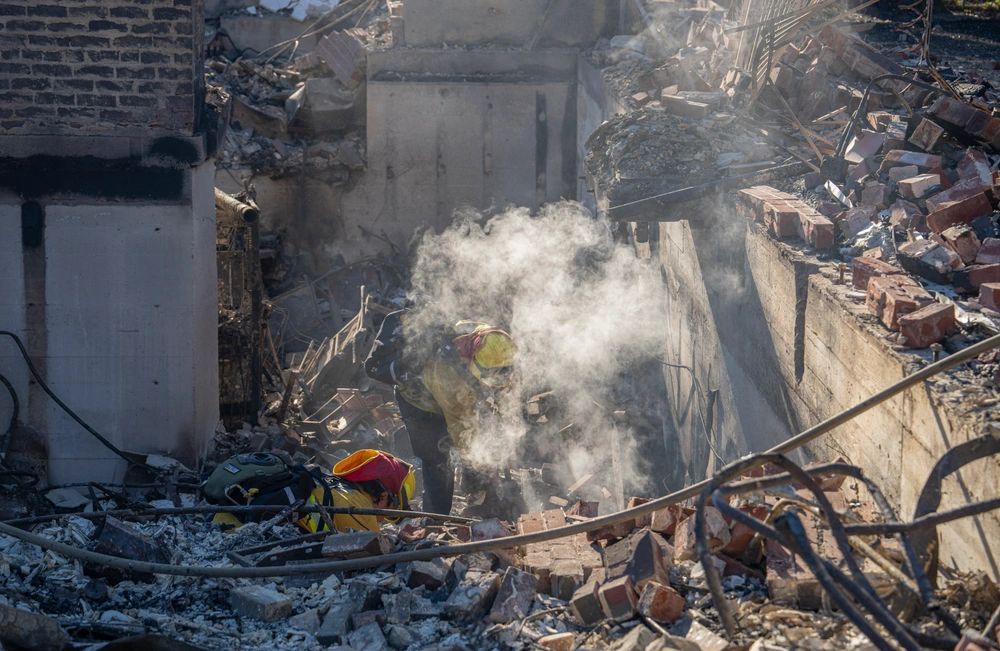
How a neighborhood drains.
One severed service connection spills about 30 gallons a minute. “With 150 of those you very quickly drain your system.”
Illustration based on Dave Pedersen, General Manager, Las Virgenes Municipal Water District (Water Education Foundation, 2019)During the 2021 Marshall Fire, city staff estimated that water draining through 300–400 destroyed homes was 6.5–12 million gallons a day.
Louisville, CO staff estimate, in Whelton et al., AWWA Water Science (2023)“Once a building is destroyed, its water service should stop.”Sowby & Porter, Water (2024)
Watch a home lost to fire, and the water stop with it.
Scroll through one fire, start to finish. The valve closes only when two things are true: there’s a fire, and the structure has collapsed.
Why existing valves can’t do this job
Nothing on the market both triggers on fire and confirms that the structure is lost.
| Option | Built for drinking-water service | Triggers on fire | Confirms structure loss |
|---|---|---|---|
| Manual curb stops Sends crews into an active burn zone | Yes | No | No |
| Smart leak shutoffs Rely on household power and Wi‑Fi | Yes | No | No |
| Industrial thermal valves Close on heat alone | No | Yes | No |
| Fire Flow Self-powered, dual-condition | Yes | Yes | Yes |
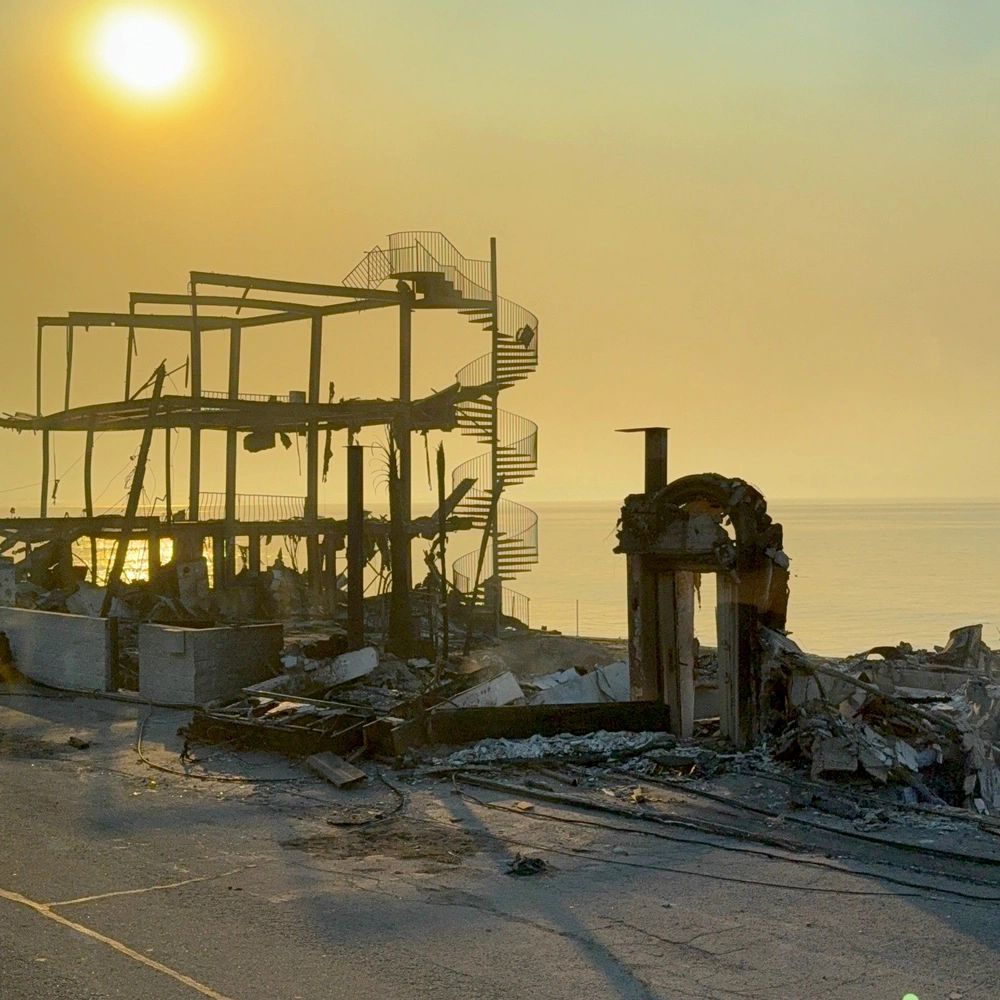
Palisades and Eaton, January 2025.
Two fires burned at once across Los Angeles County. Together they destroyed 16,246 structures and took 31 lives.
For low-density neighborhoods like the Palisades, the Fire Code plans for three adjacent hydrants flowing at once: a combined 2,000 gallons a minute.
L.A. City Fire Code §507.3.1, cited in LADWP’s preliminary report (2025)Hydrants are “sized to provide water flow needed to address fires that threaten a few properties involved in a localized structure fire.”State agency analysis of the Palisades Fire (2025)
LADWP pushed 37,000 gallons a minute toward the fire, the pipe’s maximum and four times its normal flow. By early morning on January 8, the three tanks serving the area had effectively run out of water.
State agency analysis (2025); LADWP preliminary report (2025)Local systems are “not designed to suppress firestorm conditions impacting an entire neighborhood of homes at the same time.”State agency analysis of the Palisades Fire (2025)
broken service lines, at about 30 gallons a minute each, pull as much water as all three hydrants the code plans for. In the Palisades alone, LADWP closed roughly 4,800 leaking access points.
Illustration: 2,000 gpm ÷ ~30 gpm per severed line (Las Virgenes MWD estimate). Leak count: LADWP preliminary report (2025).At the peak of a firestorm, the system is already giving everything it has. Every gallon pouring into a home that’s already gone is a gallon that can’t reach the one next door.
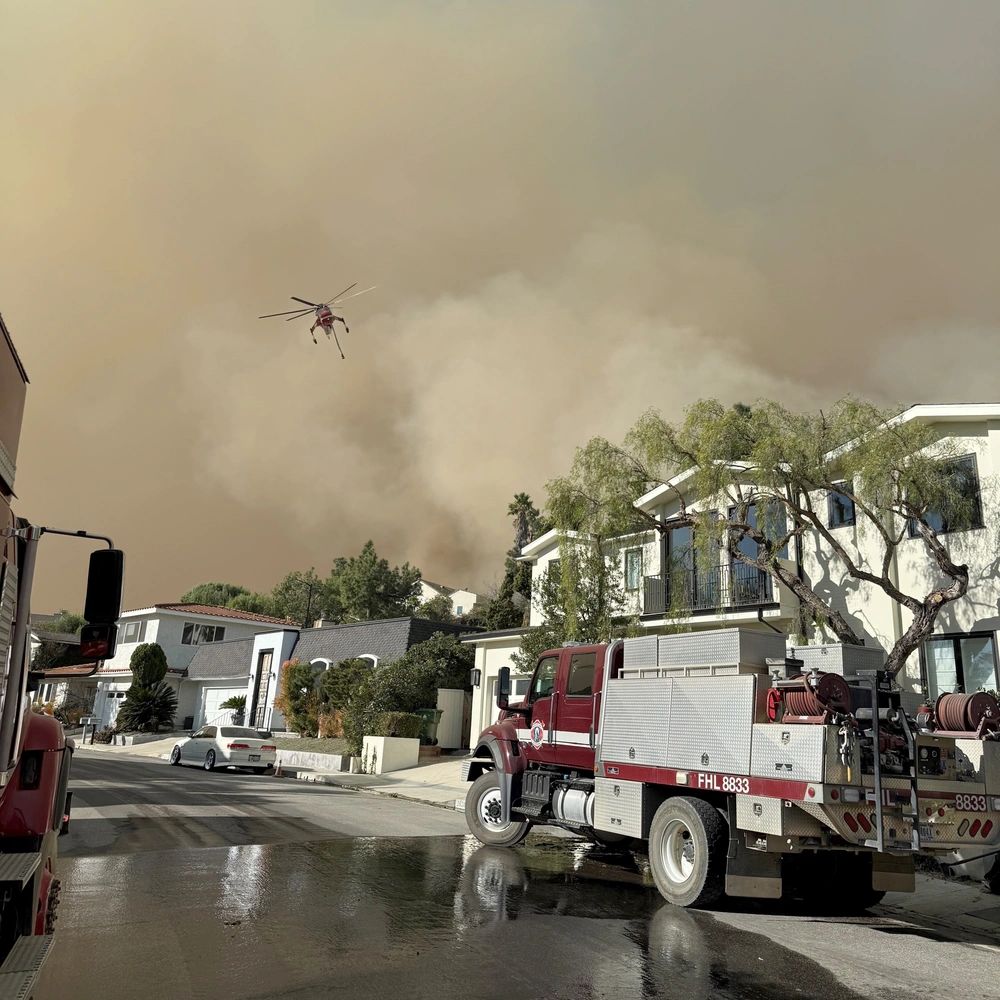
A home is more than a structure.
It’s where a family keeps what can’t be replaced: the photographs, the heirlooms, the height marks on a doorframe. Losing it upends work, school, health and savings all at once, and when a whole neighborhood burns, the community that would have helped is gone too.
Many families never come back.
lives lost in the Palisades and Eaton fires.
CAL FIREParadise’s population in 2010, and in the latest Census estimate, after the 2018 Camp Fire.
U.S. Census BureauWhen a neighborhood burns, the worst hours come all at once. Engines are drawing from hydrant after hydrant, and the water already in the pipes is all there is.
That’s exactly when water should go to the homes that can still be saved, not the ones already lost.
Fire Flow exists to keep it there.
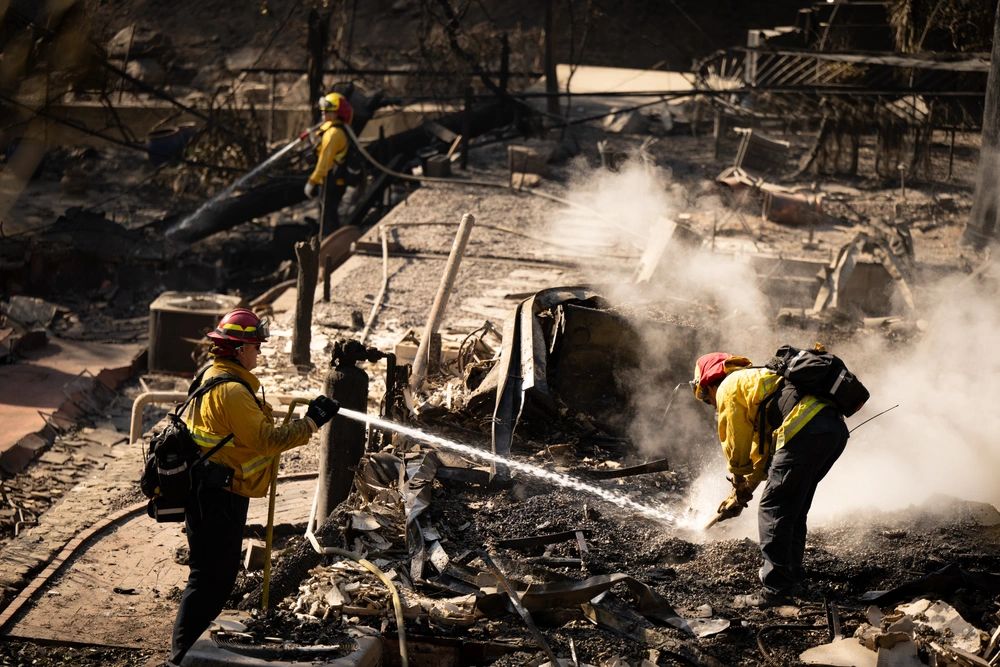
Every gallon spilling from a destroyed home is a gallon these crews don’t get.
Built for the people who keep the water on.
And for everyone who depends on that water when a fire reaches their street.
Protect system pressure, parcel by parcel.
Keeping pressure up is a utility’s core job. Fire Flow installs at the meter box you already own and closes a lost home’s service without sending a crew into the fire.
This is for you if
- Your service area includes homes in the wildland-urban interface.
- You’ve seen pressure collapse during or after a fire.
- You want early access to pilots and field data.
More water where it’s still needed.
Every home lost to fire that stops leaking leaves more pressure for the hydrants, sprinklers and hoses defending the homes still standing.
This is for you if
- Your neighborhood sits near wildland and depends on hydrant pressure.
- You’re planning rebuild standards after a fire.
- You want your utility to consider a pilot.
One valve protects more than one home.
When a single house burns, its family loses everything. When its broken pipes keep running, the whole street pays for it too. Stopping that flow is about giving every neighbor a better chance.
- The family next door.Water that stays in the main reaches the hydrants and sprinklers defending the homes still standing.
- Firefighters on the line.Crews get the pressure they need without anyone walking into a burn zone to shut off water by hand.
- Hospitals, schools and shelters.They share the same pipes, and they need water most in the hours a neighborhood is burning.
- Families coming home.Studies tie lost pressure to contamination in the pipes. Keeping pressure up is part of keeping tap water safe to return to.
We can’t promise any single home will be saved. We can help make sure the water a neighborhood has goes to the homes that can still be saved.
Work with Fire Flow.
We’re talking with water utilities, fire agencies, researchers and investors as we move toward certification and pilots.
robert@ffivalves.com
(949) 292-6312
2020 S Susan Street, Santa Ana, CA 92704